ADS technolohhy

Thứ Tư, 27 tháng 7, 2016

Hackers could sniff out your passwords if you're typing nearby

At first glance, a new hacking technique looks pretty scary. Using an attack that researchers at cybersecurity firm Bastille are calling "keysniffer," hackers can detect every key you press on your wireless keyboard.
That means they can pick up your passwords and maybe the answers to your security questions, like your mother's maiden name. The flaw affects keyboards manufactured by big names such as HP, Toshiba and General Electric. So far, bad news.
The good news? To use "keysniffer" on you, hackers would have to be pretty close. The attack works within 250 feet, which is about three-fourths the length of a football field. So international hackers aren't going to get you, and neither is anyone else who isn't in your physical neighborhood.
Like many vulnerable internet-connected devices, these keyboards are most at risk when someone with bad motives happens to be nearby -- or, more likely, has specifically targeted you. The same was true of flaws found in Hello Barbie, a doll that connects to Wi-Fi and learns to interact with its human friends.
Still, the reason your keyboard might be a touch vulnerable is disconcerting. The vulnerable keyboards are sending out each character you type over an unencrypted connection, according to Bastille researchers. That means the data flowing from your keyboard to your computer isn't scrambled, and it's no sweat for hackers to intercept and read.
Researchers from Bastille, led by Marc Newlin, said they tested low-cost keyboards from 12 manufacturers. In addition to keyboards from HP, Toshiba and General Electric (which licenses its name to manufacturer Jasco for keyboards), wireless keyboards from Kensington, Radio Shack, Anker, EagleTec and Best Buy's Insignia brand were vulnerable.
Denise Nelson, a spokeswoman for Kensington, said the company is working with Bastille on security issues. "They have taken all measures that they possibly can to close any security gaps," she said.
Nelson said new Kensington keyboards will feature an encrypted connection going forward. However, she did not know whether wireless keyboards already in use were still unencrypted. She added that the Kensington support team is ready to help customers resolve any issues.
Jasco is aware of the report from Bastille and "will work directly with its customers of this product to address any issues or concerns," the company said in a statement. Jasco is "committed to delivering secure products to its customers and would like to express its appreciation to Bastille Threat Research Group for reporting these issues."
The rest of the manufacturers named by Bastille did not immediately respond to requests for comment.
Bastille's website offers a list of the exact models affected.
"When we purchase a wireless keyboard we reasonably expect that the manufacturer has designed and built security into the core of the product," Bastille's Newlin said in a statement.

Qualcomm agrees to pay $19.5 million in gender discrimination settlement

Qualcomm has agreed to pay $19.5 million as part of a settlement in a gender discrimination suit affecting about 3,300 women, both current and former employees of the chipmaker.
The plaintiffs in the class action suit said women at Qualcomm make less than men and were promoted less frequently than "the men who work beside them," as a result of employment policies, practices and procedures, according to a preliminary approval brief. Also at issue was the treatment of working mothers. The women said various policies including 24-hour responsiveness and a culture that rewarded working late basically penalized them for having caregiving responsibilities
As part of the settlement, Qualcomm will also implement new policies to ensure that women in STEM (science, technology, engineering and math) roles have equal job opportunities, according to a statement Tuesday. The company has not admitted to any of the allegations, according to the final settlement agreement.
"While we have strong defenses to the claims, we elected to focus on continuing to make meaningful enhancements to our internal programs and processes that drive equity and a diverse and inclusive workforce which are values that we share and embrace," said Christine Trimble, Qualcomm's vice president of public affairs, in a statement.
Discrimination cases involving women in tech haven't always yielded these types of results. Former Reddit CEO Ellen Pao lost her sexual discrimination case against venture capital firm Kleiner Perkins in March 2015. Meanwhile, major tech companies regularly disclose low diversity numbers that get even lower as positions become more senior.
A notable element to this settlement is that it was reached before the plaintiffs actually filed the suit in federal court this week. This stemmed from pre-suit analysis of Qualcomm's employment and payroll data, according to a statement, as well as several months of negotiations.
"It is common knowledge that women in STEM and other related fields face persistent discrimination in pay and promotions," said David Sanford, chairman of Sanford Heisler and lead counsel for the plaintiff class in a statement. "This settlement represents a giant leap forward toward leveling the playing field and can serve as a model of best practices for other technology companies."
In a court filing, attorneys for the women called the settlement "remarkable," saying it's "one of the largest employment discrimination settlements in recent years."
For Qualcomm, some of the next steps are bringing in independent consultants agreed upon by all parties who specialize in industrial organizational psychology. Those consultants will make an assessment of Qualcomm's practices and policies and make recommendations. Other changes will includes educating employees on non-discrimination policy and investing in leadership development initiatives, the statement said.
The settlement is subject to the court's approval.

Live video has made Facebook the place to be

What a difference two years make.
Back then, when apps like Periscope and Meerkat arrived on mobile phones, live video seemed like a lark for tech nerds and poor college students looking to watch cable TV for free. But within months, protesters in Ferguson, Missouri tapped into the shaky and visceral feel of live video because they understand they can share the emotion of breaking news events with observers who might otherwise just get the news through photos and news cameras.
Fast forward to March, when Facebook began giving anyone with a phone and internet connection an easy way to broadcast live video, straight to the 1.13 billion people who use its service every day. Since then, Facebook Live has been tapped into for major events, from the Democrat's gun vote sit-in in June to the shooting deaths of Philando Castileand five Dallas police officers this month.
In each case, live video was key to telling the story. And it's what more traditional cable broadcast networks replayed in a near-endless loop as they recapped those unfolding stories.
Facebook CEO Mark Zuckerberg described these live video feeds, captured and broadcast from phones, as "graphic and heartbreaking."
That was the backdrop of Facebook's second-quarter earnings results on Wednesday, when Zuckerberg underscored how important live video has become to the company. "We see a world that's video-first," he said in a conference call with analysts. "We've seen in Minnesota and Dallas how live (video) can shine a light on important moments as they happen."
In the three months ended June 30, Facebook tallied 97 cents per share in profit, after adjustments for costs like stock-based compensation. Revenue, which comes primarily from showing ads to Facebook users, jumped nearly 60 percent to $6.4 billion. Analysts were looking for profit of 82 cents a share on sales of more than $6 billion, according to surveys from Thomson Reuters.
Facebook's shares rose more than 5 percent in after-hours trading, after closing at $123.34. The company's stock has risen more than 17 percent so far this year.

More than a billion on mobile each day

The growing importance of live video follows another trend at Facebook: the usage of smartphones. Facebook said more than 1 billion people access its service from a mobile phone each day, a new record. That represented more than 91 percent of the people who access the service each day.Most of those mobile phones have a camera on them, and since all of them are connected to the internet, they're each a Facebook Live stream waiting to happen.
Mobile users are also making a significant amount of money for the company. Facebook counted $5.2 billion in advertising dollars from mobile devices, representing 84 percent of the company's total.
Sheryl Sandberg, Facebook's COO, said companies are increasingly switching to mobile devices as well. Over 85 percent of businesses who manage a profile-like "page" on Facebook use a mobile device, she said, and 40 percent of active advertisers have created an ad on their mobile device.
"People have shifted to mobile and marketers know they need to catch up," she said. "Mobile is no longer a nice to do, it's a must to do."
Mobile devices have also become a key part of Oculus, one of the company's long-term bets. Facebook said more than 1 million people a month are using the Gear VR, a device created in partnership with Samsung.
So how will Facebook change over time?
Zuckerberg said it's harder to type a long post on a phone, compared to a laptop computer. He's also noticed people are uploading fewer organized photo albums, despite Facebook being the most-used photo site on the web. Instead, he said, people are uploading photos after they're taken, and they're sharing with friends and groups instead of publicly to the entire community.
"The overall level of sharing is up on Facebook and what we're seeing is that how people share is evolving," he said. And it's not just about the News Feed anymore

Chủ Nhật, 17 tháng 7, 2016

Pokemon Go: The latest fad diet?

Forget fitness apps, Pokemon Go might be just what you need to get moving.
Pokemon Go players are taking the hit mobile game very seriously and as a result are spending more time walking around outside,according to a survey released Thursday by Qualtrics.
Pokemon Go players are spending about two more hours outside per day than they were before they started the game, according to the survey, and 43 percent of respondents reported losing weight -- about three pounds on average.
The game uses augmented reality to place digital "pocket monsters" in the real world. Players arepushed to move to find new Pokemons and collect items at PokeStops, which are shown on a map using GPS.
Qualtrics conducted its survey of 750 Pokemon Go players across the US on July 13 and 14 to find out more information about typical players.
In addition to the activitive finding the survey, found that 44 percent of players visited a historical landmark for the first time  hanks to the game, which places PokeStops at landmarks in the real world. This, however, has led officials at more somber landmarks,like the Holocaust Museum and Arlington National Cemetery, to request that people refrain from playing the game while visiting.
The survey also shows that while getting more activity, players are also taking somehealth risks. Some 4 percent of players surveyed were pulled over for playing Pokemon Go while driving and 85 percent played the game while driving a car. Thefirst known car crash related to Pokemon Go happened in Auburn, New York.
Qualtrics also confirmed something we already knew...that Pokemon Go is addicting. Some 16 percent of respondents reported playing more than four hours a day, while 21 percent said they would rather play than have sex. Now that's some dedication!

Windows 10 to miss 1B devices deadline. Blame lousy Windows Phone sales

A little over a year ago, with much fanfare, Microsoft executives drew a line in the sand, predicting that Windows 10 would be installed on 1 billion devices by mid-2018.
Today, Microsoft officials are conceding that they likely won't make that deadline.
ZDNet's Ed Bott noted at the end of a blog post Friday that Microsoft officials still think they can hit the 1 billion Windows 10 market, but that "it's unlikely to happen by 2018 as originally projected."
I asked Microsoft for further clarification and received the following statement from a spokesperson:
"Windows 10 is off to the hottest start in history with over 350M monthly active devices, with record customer satisfaction and engagement. We're pleased with our progress to date, but due to the focusing of our phone hardware business, it will take longer than FY18 for us to reach our goal of 1 billion monthly active devices. In the year ahead, we are excited about usage growth coming from commercial deployments and new devices - and increasing customer delight with Windows."
Microsoft Windows and Devices chief Terry Myerson made the original claim at Build 2015, noting that the 1 billion figure would encompass all kinds of devices that would run Windows 10 in some variant, including desktops, PCs, laptops, tablets, Windows Phones, Xbox One gaming consoles, Surface Hub conferencing systems, HoloLens augmented-reality glasses and various internet of things (IoT) devices .Officials said at that time that the majority of those 1 billion devices would be PCs and tablets.
But Windows Phones running Windows 10 Mobile also were expected to help Microsoft reach that total by mid-2018. Since April 2015, the bottom has fallen out of the Windows Phone market, with Microsoft officials conceding that Windows Phone isn't much of a focus for the company in calendar 2016.
Microsoft is still rumored to be launching some kind of Surface Phone type device, but not until 2017. The Surface Phone will be a niche play, focused on the business market and meant as a showcase for Microsoft's Continuum feature.
Microsoft has been aggressively trying to move existing Windows 7 and 8.x users to Windows 10 via a free upgrade program which is ending on July 29.
Ending the free upgrade is likely to have relatively little impact on the uptake of Windows 10, however, as few users get a new version of Windows via an update. They typically get a new version via a volume-licensing/purchasing agreement or when they buy new hardware with a new operating system installed.

Would you give up the iPhone 7's headphone jack for better battery life?

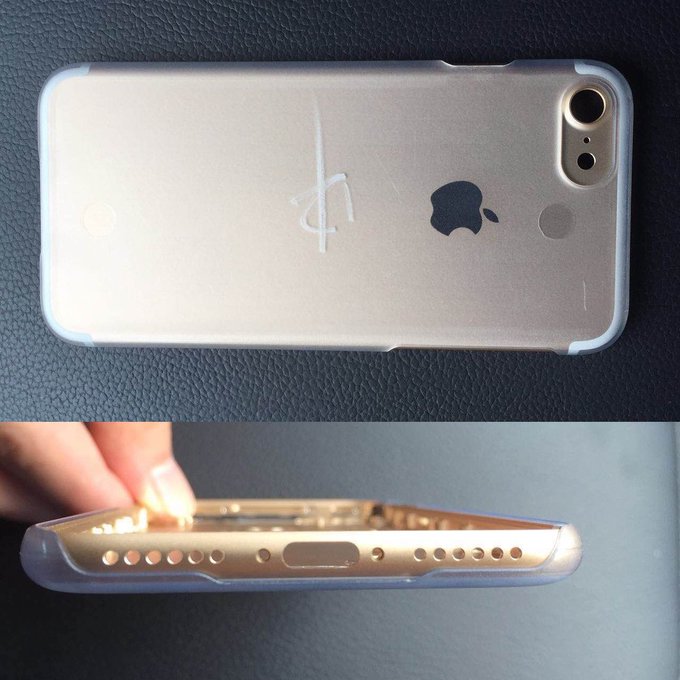
For the last several months the prevailing rumor about the next-generation iPhones has been that Apple would do away with the headphone jack to help make the hardware thinner. But in recent days the latest chatter has been about the size of the next iPhone's battery.
Steve Hemmerstoffer (aka @OnLeaks) of Nowhereelse.fr, who has a good track record of leaking things that turn out to true, tweeted that a reliable source revealed that the iPhone 7 will receive a healthy battery upgrade.
The battery would go from 1,715 mAh to 1,960 mAh, which translates into a 14 percent bump in capacity. It's unclear how much of a battery life bump that will ultimately give you, but that translates to 90 minutes more video playback time -- 12.5 hours versus 11 hours -- if you do the math on Apple's iPhone 6S stats.
Any jump in capacity would be a significant change for Apple. Remember that the battery in the 6S isactually smaller than that of 2014's iPhone 6 (1,810mAh). That's because Apple needed to cram in the "Taptic Engine," which helps enable the 3D Touch feature of the 6S. But due to presumed efficiencies of the 6S's newer processor and hardware, Apple was able to get the same battery life from that model as the earlier 6. (Both are rated at the same talk time, browsing time and video playback time.)
Earlier this year tech pundits postulated that Apple was nixing the headphone jack to make room for a second speaker. Rumors persist that speaker will be added, but this is the first time (I've seen) a battery-capacity bump also linked to the jack dismissal.
It all makes a certain amount of sense. Simply put, in a world where the iPhone isn't allowed to get any thicker, you have to give up something to get something.
Is that a trade I'm willing to make? I'm on the fence, partially because I'm not sure how much I'll miss the headphone jack if it is removed.
A good wired headphone still offers the best sound, but I'm a proponent of Bluetooth headphones and use a wireless model about 50 percent of the time with my phone (I test both wired and wireless headphone and have a used a few that plug directly into the Lightning port). Still, I don't think I could move to using wireless headphones 100 percent of the time, so I'd have to get some sort of adapter, which seems like a nuisance.
The good news -- for me anyway -- is that I'll most likely pass on the next iPhone, whatever Apple puts out. I have a 6S, which has plenty of life left in it. And I have a Galaxy S7 on loan from Samsung to get my Android fix.
What I am hoping for is that by the time I do need to upgrade my iPhone I won't feel like I'm making any compromises. That shouldn't be too much to ask for an $800 phone, should it?

Vevo, with another revamp, wants to be the Vice of music videos

Vevo is trying to refashion itself into a service cool enough for you to remember what it is.
The online music video company on Thursday launched a sleeker app -- its second revamp in less than a year -- that adds firepower for personalized recommendations, puts artists on greater display and aims to hone the edge of its original content.
"This a big bet," Erik Huggers, CEO of Vevo, said in an interview Thursday. "There is a real opportunity beyond...just dropping a song or video in a playlist."

vevo-player.gif
Vevo's new app introduces a video player that favors "vertical" viewing, the way most people naturally hold their phones.Vevo

The revamp is the latest attempt by Vevo to establish its own identity apart from the little logo in the corner of YouTube's most popular videos. Vevo is a bedrock for music videos on the internet. It offers 200,000 official music videos that draw 18 billion views a month globally on its popular YouTube channel and its own site and app. Yet most would struggle to recall its name.
Similar to how Vice has become synonymous with edgy alt-news for the mobile age, Vevo is aiming to become the go-to place to revel in music video culture. But competition is fierce for music lovers' attention: Audio-first services like Apple Music and Spotify are adding more video. Apple Music has even begun funding music videos from artists like Drake and financing other projects to secure them as exclusives for a period of time.
Vevo updated its app with a more personalized video feed that previews videos with a 15-second silent autoplay, all shown in vertical, "portrait" orientation. When you tap a video to start rolling, the app's new player stays in vertical mode. That leads to some instances where important text or images on the edges of the frame are cut off, but users can swipe up to shrink the player so nothing is obscured, which also reveals a playlist of recommendations below the clip. You can always rotate the device to watch the video in a traditional horizontal mode.
The app also adds the option of making your activity on Vevo a public profile, giving it a more social network flavor.
Vevo's original content arm is adding a roster of hosts for short-form videos to come, and it is hiring curators who will work with a team of data scientists to create and direct people to playlists relevant to their tastes. Vevo is planning to make short films and foster more live productions that users can watch on-demand later.
The look of Vevo got an overhaul as well. Its black-and-white logo is sharper, and all of its "sub-brands" -- like live-event series Vevo Presents and emerging-artist showcase Vevo Dscvr -- fall in line with a similar style. As a result, their thumbnails look more natural sitting next to one another.
Vevo is a joint venture of two of the three major music labels, Universal Music Group and Sony Music Entertainment. Outside investor Abu Dhabi Media and YouTube's parent, Google, also hold stakes in Vevo.